Filter by
Seminar | Tax classification of the FGR: what you need to know
The tax classification of the common account fund (CIS) is a topic that has long attracted the attention of fund managers and institutional investors. But since Jan. 1, 2025, the scope of the new FGR definition has been significantly expanded and (foreign) partnerships may also potentially qualify as FGRs. In addition, an important new dimension has been added: the assessment framework has been expanded to include a regulatory test. This makes the matter more complex, and the need to be well informed greater, also because of the potentially large consequences. The classification rules are relevant to a broad group of DUFAS members: from fund managers to pension funds, insurers and fund-of-funds, and both Dutch and non-Dutch investment funds. Moreover, solutions often have a direct impact on fund documentation, so the civil law side also comes into play to a full extent.
Response to EU consultation on the Climate Delegated Act.
We have submitted our response to the European Commission public consultation on the draft amendments to the Climate Delegated Act under the EU Taxonomy Regulation.
DUFAS calls for targeted improvements to SFDR to strengthen implementation and comparability
As DUFAS we welcome the European Commission's proposal to revise the Sustainable Finance Disclosure Regulation (SFDR) as a significant and much-needed step forward for the EU sustainable finance framework. We reiterate our strong support for the SFDR and its core objectives of enhancing transparency, strengthening investor confidence, and supporting the transition to a more sustainable economy. The proposed shift toward a product-focused framework, combined with a simplification of entity-level requirements, marks an important improvement in making the regulation more practical and effective. At the same time, we recommend several targeted improvements to ensure that the revised framework is workable in practice, supports capital allocation to sustainable activities, and enhances comparability for investors. The DUFAS position statement, prepared by our SFDR Expert Group, contains several key recommendations, including:

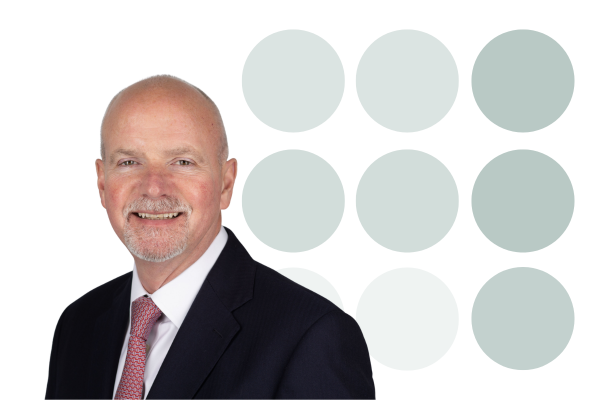
‘People can decide what they want with their money’ – In conversation with Dirk Jan van der Hoeden, Chief Commercial Officer at Possibly Real Estate Finance
Private credit is experiencing growth. The newest DUFAS member, Mogelijk, is a market leader in commercial real estate financing. With Dirk Jan van der Hoeden, who holds the commercial reins at Mogelijk, we talk about the sector's growth, opportunities and risks. Not everyone is enthusiastic about the growth of private credit. It is seen as risky. That is one big misconception, explains Dirk Jan van der Hoeden "The market is well regulated. We actually seek out the regulator."
‘Many companies seek private money, but it’s often not so well known’ – In conversation with Noussair Aatil, Head of Distribution & Wealth Amundi Netherlands
Noussair Aatil has been in banking for years, most recently for Amundi. Recently, at asset management trade association DUFAS, he chaired a new expert group on private markets. He was interested in financial markets from a young age. In addition, he also immerses himself in private markets. He finds it particularly interesting to see in what ways companies are financed with private capital: traditionally by institutional investors, but increasingly accessible to smaller investors. This is a growing and important topic given the increasing demand for private investment.
Financial sector asks new coalition for clear and reliable climate policy
In a letter to administrators of the new cabinet, the Dutch financial sector announces that it supports the new coalition's course on climate and green growth. At the same time, banks, pension funds, asset managers and insurers are asking the new administrators for a clear and reliable long-term policy.
DUFAS responds to consultation on Digital Fitness Check of EU digital regulations
DUFAS has responded to the European Commission's consultation on the Digital Fitness Check, an assessment of the cumulative impact of European digital regulations. With this fitness check, the Commission wants to assess how various digital legislative initiatives collectively work out in practice.
Letter to the Minister of Finance
DUFAS congratulates the Minister of Finance on his reappointment. We look forward to a good cooperation in the coming years.
DUFAS response to Call for Evidence Better Regulation.
In January, the European Commission published a call for evidence with the goal of achieving Better Regulation. From DUFAS we support the objectives of the European Commission regarding Better Regulation and the importance of evidence-based, proportionate and predictable regulation. At the same time, we emphasize that effective regulation requires clear choices: not all risks can or should be regulated away. Regulation should focus on material and systemic risks, with room for professional supervision and market forces, so that urgent situations can be dealt with quickly and purposefully.
Financial sector reaches out to new coalition to work together on future-proof economy
The Dutch financial sector welcomes and supports the ambitions of the new coalition. The agreement is a step in the right direction to sustainably strengthen the earning capacity of the Dutch economy. The financial sector endorses the importance of stable and predictable long-term policy. Based on that conviction, the organizations involved are reaching out to the Jetten cabinet to work together on the further elaboration and realization of the plans. The sector is keen to discuss the removal of unnecessary national headings on European rules, strengthening the capital market and improving the business climate.
Sign up for DUFAS general membership meeting
DUFAS contributes to new handbook on integrating impact into investment portfolios
Collaboration and knowledge sharing in the financial sector are essential for advancing sustainable finance. We are proud to have contributed to the publication of a new handbook on integrating impact into investment portfolios, developed by the Working Group on Integrating Impact under the Sustainable Finance Platform. The handbook brings together practical experience and academic insights in one shared educational document.