Let's get right to the point. What are misconceptions when it comes to the private credit market?
"For us, transparency is key, so let me explain what we do. Possible is an investor platform, where investors finance the business real estate of entrepreneurs. This can be direct, meaning a specific property, or through a fund structure, where multiple investors finance the real estate of multiple entrepreneurs. These include offices, manufacturing companies, agricultural businesses, right down to bakeries and restaurants. SMEs do not always get financing from the bank, partly because of loan amounts that are too low. Also, after the banking crisis, capital requirements have become higher. The world has changed, the bank is no longer just around the corner. That's why they come to us. We have partially taken over the bank's position. Ultimately, I think society benefits because there is more choice. The industry is becoming more regulated, and Possible is looking for the regulator. We want to show borrowers, investors and the regulator that we have our business together and that it's safe with us."
So how safe is it?
"Investing always involves risk. We maximize collateral for our investors. For example, if you have €100,000 lying around and you invest in a real estate proposition, you have the right of first mortgage. We finance retained and each borrower co-signs jointly and severally. That provides collateral. We operate in full transparency. It's not either banking or with us. It's and-and. We all have a role to play. It's a growth market, so our proposition will only become more important rather than less relevant."
And what is the benefit to the entrepreneur who needs money?
"Entrepreneurs want to be able to get financing quickly. With a bank, it's a difficult and long process, sometimes of months. And then the outcome is also uncertain. With us it is faster. It's a matter of days, weeks at most. The interest rate is higher, the repayment pressure is more limited. We are satisfied if you pay off up to fifty percent of the loan amount. In terms of cash flow, it doesn't make much difference whether you choose us or a bank. We have now helped more than 10,000 entrepreneurs."
Meanwhile, you continue to grow and even introduce funds.
"That provides even more security. We get the mandate from an investor who says: just find good funding. We then look at a fund solution, where we first raise money from multiple investors. We are clear about conditions and returns. Such a fund has an average size of fifty to sixty million euros. We now have 600 million in funds and we continue to grow. We then spread the risk over a wide range of financing. The impact of a loan is thus a lot smaller if things go unexpectedly wrong."
Do you agree that the regulatory reflex threatens the financing of the Dutch economy? And how do you discuss that in the private markets expert group within DUFAS?
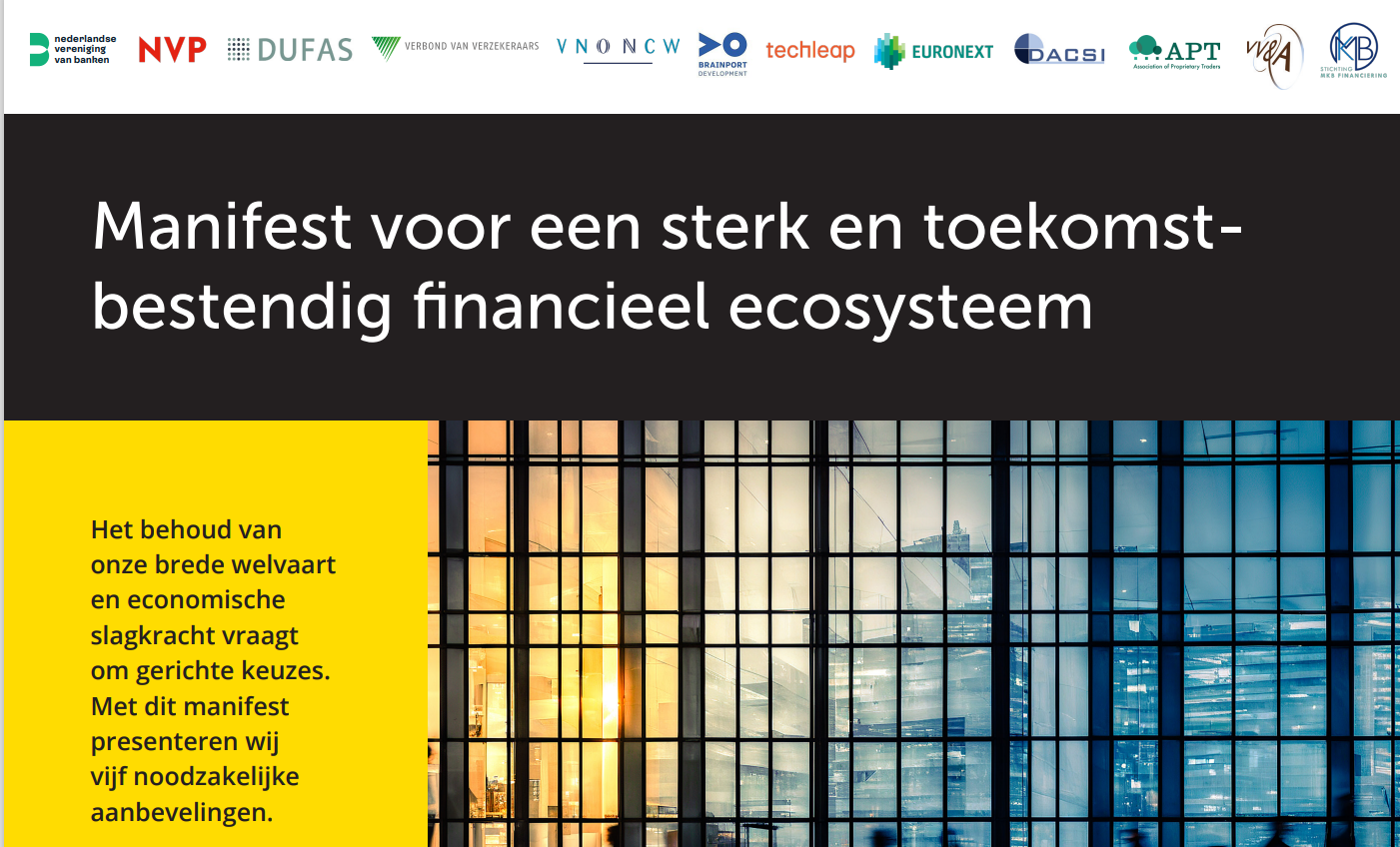
"The Dutch Central Bank is still looking at the 2008 banking crisis with a slanted eye. Logical, because cowboy practices struck a deep wound then. DUFAS gives us a platform to share knowledge of our specific market and how we design our funds. As the market leader, we feel that responsibility. By the way, we learn from large institutional parties who have been in this business much longer than we have. Regulatory pressure is a big issue. On the one hand, of course it is fine that a European capital market is being formed, in which consumer protection is important. On the other hand, there are many national regulations in the area of taxation, which therefore differ from country to country. If we want this capital market, we must act together. You have to democratize the European citizen, so to speak. They can decide for themselves what they want with their money. In an era of large power blocks such as the U.S., China, Japan and India, Europe must be constantly busy in order to compete globally. That is essential for our economy to flourish."